Hedvika Petrželková
10. July 2026

From a Copper Mine to an Art Nouveau Villa:
A former copper mine, the Tesla industrial complex in Hradec Králové, abandoned factories, historic Broumov, or an Art Nouveau villa in the centre of Hradec Králové. These and other film locations were presented by the Czech Film Commission, in cooperation with the Hradec Králové Region Film Office, to Czech filmmakers during a two-day location scouting tour held on 23 and 24 June 2026. The programme focused primarily on industrial locations and brownfields, while also showcasing the architectural and natural diversity of the Hradec Králové Region.
Authentic Film Locations to Inspire Future Projects
The tour confirmed that visiting a film location in person holds irreplaceable value for filmmakers. Over the course of the two days, numerous participants earmarked sites they could utilise in their upcoming projects.
Producer Petr Koza (KOZA Film) arrived with a very specific objective. "Right now, I’m most interested in locations from the 1970s that are still in their original state. I’m developing a live-action feature film set during the post-war era, and some of the sites visited could be used for it." He also praised the concept of the tour itself: "There are no useless locations, because we never know what might come in handy in the future."
Director, screenwriter, and producer Jan Kolář (Overhere) shared a similar view, having been most intrigued by the Tesla building in Hradec Králové: "An original ground-floor garage, a very design-focused interior, glass-walled offices, and glass blocks. I was also highly impressed by the villa in the centre of Hradec Králové, with its beautiful entrance lobby and stately staircase. Both locations offer wide-ranging possibilities across various film genres." He also described the atmosphere of the Bohumír copper mine as exceptional.
Czech Television’s Karolína Tomanová highlighted the unique character of the industrial sites: "I particularly liked the Snaha production facility and the copper mine, both of which instantly exuded their genius loci. The combination of a partially dilapidated building and encroaching plant life created a post-apocalyptic atmosphere. The mine strikes me as a unique and properly eerie film location."
Radka Hrubcová (Boogie Films) especially appreciated the diversity of the sites visited: "Each location had its own specific character and potential purpose." She singled out the historical streets of Broumov and Jaroměř, the former weaving mill in Heřmanice, and the Baroque chapel in Smiřice as the most interesting.
Participants also appreciated the opportunity to meet face-to-face with representatives from the regional film office and the Czech Film Commission. "It was beneficial to personally meet the representatives from the regional film office, as well as someone who directly handles production incentive schemes, to learn how the entire support process works," commented Radka Hrubcová.
All of the tour participants agreed they would recommend the tour to other industry professionals.
Jan Kolář praised not only the programme but also the organisation of the event: "Both days took place in a very pleasant atmosphere with truly premium service."
Lucie Hučíková from the co-organiser, the Hradec Králové Region Film Office, evaluated the event positively: "The tour was a fantastic opportunity to show filmmakers how diverse and visually powerful the Hradec Králové Region is – from industrial complexes and brownfields to historical buildings and places with a unique atmosphere. I believe the participants took away plenty of inspiration and will return to our region with specific film, television, or commercial projects."
© Czech Film Commission
Tesla Hradec Králové and the Coding Centre in Charbuzice
The first stop was the Technologické centrum TESLA, s.r.o. complex. The company owns part of the site of the former state enterprise TESLA Hradec Králové. The history of the plant dates back to 1952, when a specialised workshop for piezoelectric resonators was established here. Today, the complex rents out testing workshops, laboratories, warehouses, and offices. A collection of historical vehicles is also available to filmmakers.
Next on the itinerary was the complex of the former broadcasting and coding centre of the Ministry of Foreign Affairs in the village of Stěžery, part of Charbuzice. The site, spanning over 85,000 m², includes a telecommunications mast, operational buildings, living quarters, and a transformer station. The extensive land is ideal for reality shows, for example. In the past, the complex served as a radiocommunications centre featuring a jammer for Radio Free Europe broadcasts.
Both sites belong to the same owner, as does the next location – the Snaha Jaroměř complex.


The Snaha Jaroměř Complex and the Bohumír Mine
The Snaha complex in Jaroměř originally manufactured footwear under a shoe-making cooperative, which was later integrated into the Svit state enterprise. High boots and strap shoes were made here in Jaroměř; later, fall-protection equipment was manufactured on site. Currently, part of the complex is unused and slated for redevelopment.
The Bohumír copper mine was founded in 1853 and operated off and on until 1965. In 2015, the mine opened to visitors, offering an authentic underground space with the atmosphere of a genuine mining world. The underground route is over 400 metres long. The film location offers a distinct atmosphere of a confined underground environment, industrial details, and a specific interplay of light.
“Tall houses similar to the famous bird houses in Úštěk can also be found in Jaroměř," says Petra Marková, location specialist at the Czech Film Commission. "The centre, with its historic square, is set off from the rest of the town by parks, and there are vacant shops where filming can also be arranged," she adds.


The Town of Broumov
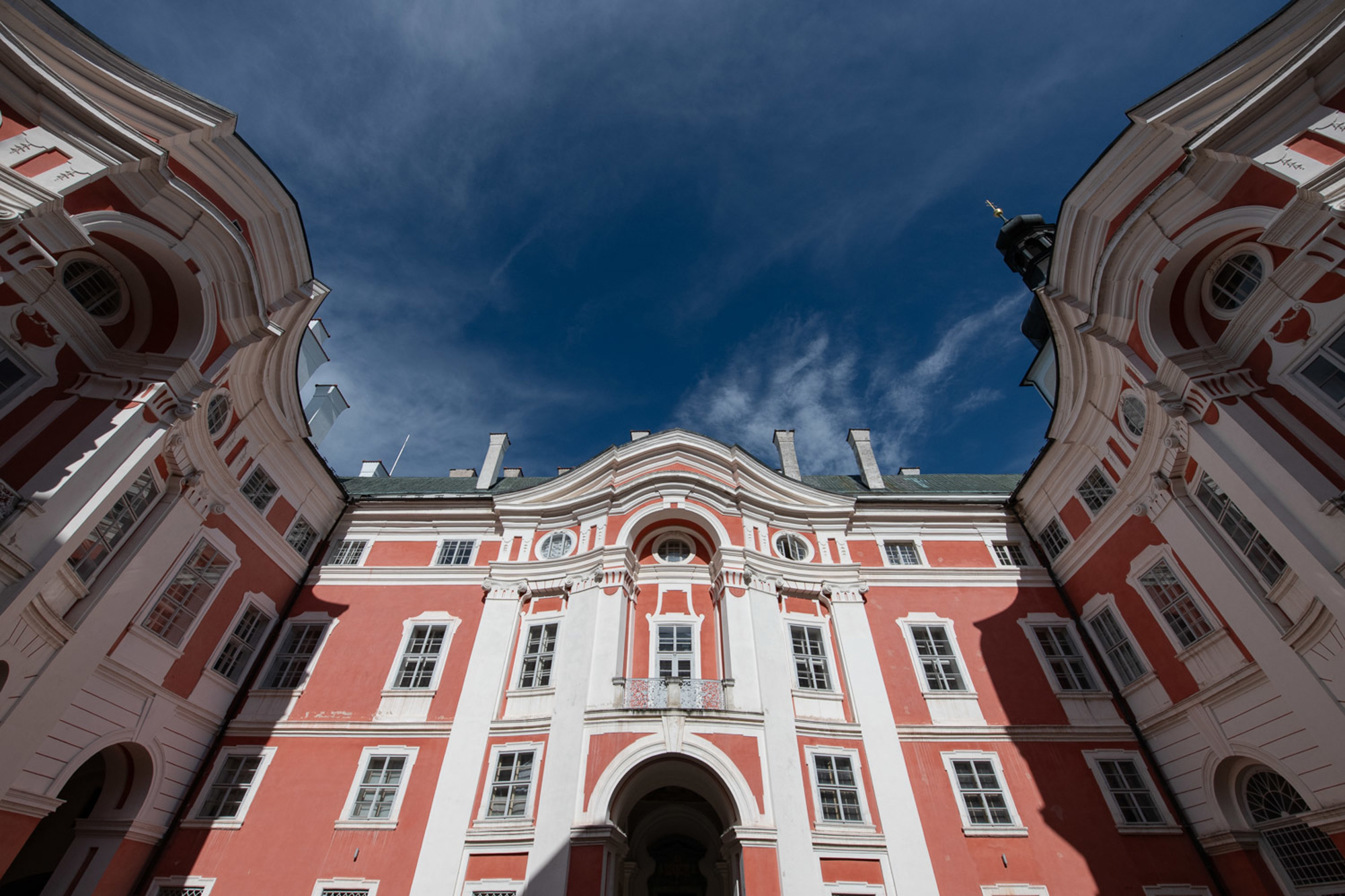
Founded in the 13th century, Broumov offers filmmakers an extraordinarily diverse backdrop – from its historic centre and industrial sites to the dramatic landscape of the Broumov Walls (Broumovské stěny). The town's dominant landmark is the Benedictine Monastery, one of the most important Baroque monuments in the Czech Republic. The monumental complex was rebuilt according to a design by Kilián Ignác Dientzenhofer. We only visited the exterior and the small cellar because the monastery is currently transitioning to a new administrator, with whom the conditions for potential filming have yet to be negotiated. The town’s atmosphere is completed by well-preserved side streets, Classical and Art Nouveau townhouses, and industrial sites, such as a former slaughterhouse and a historic brewery.


The Brewery and Former Slaughterhouse
Another striking stop was the historic brewery in Olivětín, whose tradition dates back to the early 15th century. The current complex expanded from the second half of the 19th century and has retained many of its original technological operations to this day – including the malt house, brewhouse, fermentation room, extensive cellars, and original industrial architecture. Thanks to its gradual evolution from a steam-powered operation to more modern technological extensions, it represents a unique film location with a strong industrial atmosphere.
Located near the brewery is the former municipal slaughterhouse from the end of the 19th century. The extensive brick complex, featuring preserved cold storage rooms where natural ice from the river and surrounding ponds was once used, ceased operations in the 1900s. Today, both sites exude raw atmosphere and present attractive backdrops for films and series seeking an industrial setting with a strong genius loci. "The slaughterhouse has a very sombre atmosphere," notes Petra Marková.


Hotel Veba, Broumov
This First Republic villa was built in 1927 according to a design by the Brno architect Heinrich Fanta as a wedding gift for the daughter of a textile factory owner. From the 1950s onward, the villa was owned by the VEBA state enterprise, which established a dormitory there. Since 1993, it has served as a hotel, offering stylish rooms with high ceilings and leafy views. The property includes a restaurant, café, lounge, as well as a park with a terrace, fountain, children's playground, and an open grill.


The Slavný Viewpoint and the Former Weaving Mill in Heřmanice nad Labem
We began the second day of the tour with a view of the Broumov Basin from the Slavný hill. Afterwards, we visited the former weaving mill in Heřmanice nad Labem. The expansive factory complex was established in 1894 on the site of an original manorial mill, initiated by the prominent textile entrepreneur Josef Jan Menčík. It is a four-storey factory building complete with a boiler room, engine room, turbine house, and a working-class residential colony. The building's use changed several times during the 20th century – ranging from grain warehouses to furniture manufacturing – but thanks to a long-term, sensitive approach, it has retained its original industrial character. The preserved production spaces, technical infrastructure, and a functional hydroelectric power plant create an intriguing backdrop with extraordinary film potential. The current owner is actively working on restoring the building.


Smiřice: The Chapel of the Epiphany and the Former Brewery
In Smiřice, we visited a unique complex combining Baroque architecture with industrial heritage. The dominant feature is the Chapel of the Epiphany, the construction of which began at the end of the 17th century. Its authorship is still attributed to two giants of Czech Baroque – Kryštof Dientzenhofer and Jan Blažej Santini. Thanks to its unusual architecture, richly structured interior, and exceptional acoustics, the chapel represents an attractive film location. "The administrator sang for us beautifully in the chapel," says Petra Marková from the Czech Film Commission. "Since the chapel was built privately by the owners and was never consecrated, filming inside can be carried out without any issues. The surrounding courtyard looks as if it is from a wartime period," Marková points out.
In the immediate vicinity of the chapel lies the former castle brewery, which for centuries served as the economic hub of the Smiřice estate. Beer was brewed here from the 16th century until its operations ceased in 1949. The surviving farm buildings now bear traces of their long history and later industrial use, and, together with the chapel, they create a visually striking contrast between sacred and industrial architecture.


Sokol Hradec Králové
Filmmakers' attention was also drawn to the functionalist Sokol building in Hradec Králové, completed in 1930, designed by architect Milan Babuška. The striking building, built in the spirit of "white functionalism," impresses with its monumental, strictly symmetrical facade and diverse interiors, which originally included gyms, a cinema, a restaurant, a library, and a puppet theatre. In 1989, a sports hall designed by architect Karel Friedrich Jr. was added to the southeastern corner of the Sokol building.


The Municipal Music Hall and the Villa on Tomkova Street
In the historic centre of Hradec Králové, participants also toured the Municipal Music Hall, which was created through a sensitive reconstruction of the former Chapel of St. John of Nepomuk. Alongside the main concert hall with its historical organ, it also offers an atrium, a knight's hall, and cellar spaces.
Located nearby is the Art Nouveau villa on Tomkova Street, a distinctive corner building featuring a turret and an onion dome. One of the most picturesque and photogenic features of the villa is its stately staircase.


The Malšovická Arena, the Centre of Andragogy, and the Hradec Granary
The Malšovická Arena is a sports stadium that opened in 2023 on the site of the former All-Sports Stadium (Všesportovní stadion), which operated from 1960. It is colloquially nicknamed "Under the Lollipops" (Pod lízátky) after its floodlight masts shaped like lollipops. The arena's capacity for football matches is 9,300 seats, and when utilising the pitch area, the capacity for concerts can be expanded to 25,000 places.
In Hradec, we also visited the Centre of Andragogy in Svobodné Dvory, known as the Brickworks (Cihelna). The award-winning building, which won the Hradec Králové Region Building of the Year in 2015, represents a prestigious educational and administrative facility featuring clean modern architecture, versatile conference and training spaces, and top-tier technical facilities.
The final stop of the tour was the Hradec Granary (Hradecká sýpka), a former cooperative grain warehouse located near the main railway station. The monumental industrial building from 1903, designed by architect Josef Novotný, has retained its raw character and distinctive architecture despite changes in use. "There are plenty of industrial buildings surrounding the granary. There are holes in the floor inside the facility, so one must move around with caution; however, it offers rewarding vistas for photography," says Petra Marková from the Czech Film Commission.


Conclusion
The tour demonstrated that in-person visits to locations and meetings with property owners and regional representatives remain among the most effective ways to introduce new shooting locations to film industry professionals. Many of the properties visited stand a strong chance of becoming backdrops for future films, TV series, and commercials. The Czech Film Commission will continue to support the discovery of exceptional film locations across the Czech Republic, bridging the gap between property owners and both domestic and international filmmakers.
Contact for filming in the South Bohemia Region:
Hradec Králové Region Film Office
Lucie Hučíková: hucikova.lucie@ccrkhk.cz, +420 775 968 519
The mission of regional film offices is to attract audiovisual projects to their regions and to be a reliable source of information for Czech producers.
One of the main tools to draw filmmakers’ attention to the region’s film-friendly locations is the location tour, which is organized for Czech film professionals, from producers and location managers to directors, writers, cinematographers, and film architects, by the regional film office in cooperation with the Czech Film Commission.
A representative of the regional film office connects filmmakers with property managers and owners. A location tour is often the first step towards further inspections for a specific audiovisual work in pre-production.
A photographer specializing in architecture, landscape, and location photography is present on the location tour. The resulting photographs are then used to promote the film-friendly locations by the regional film office and the Czech Film Commission for promotional activities aimed at foreign filmmakers and are actively offered when specific requests from abroad are received.