On a tour of the East Bohemian region and its captivating film-friendly locations
At the beginning of October we set out with representatives of the East Bohemia Film Office and a group of filmmakers to learn more about locations in the East Bohemian Region that are open and ready to receive filmmakers. Aware of the risks of coronavirus infection, we equipped ourselves with masks and hand sanitiser. We were greatly looking forward to a tour of the Pardubice and Hradec Králové regions - we usually organize four such tours every year in cooperation with regional film offices. For obvious reasons, this hasn’t been possible so far this year, so this two-day tour was a welcome respite. Join us as we take a look at some interesting locations that we presented to the filmmakers.
Kuks | Photo: Czech Film Commission
After arriving in Pardubice, we visited the Chocolate Bajer café located near the Green Gate, a stylish location with a touch of the First Republic. We toured the city center, its squares, and narrow cobblestoned streets, which filmmakers often seek out for films that take place around the time of World War 2. We also had a look at the local chateau and then continued by bus to the Hradec Králové region.
At the Podorlický open-air folklore museum in Krňovice, we found architectural and technical monuments of the Hradec Králové region, the foothills of the Orlické (Eagle) Mountains, and the Krkonoše (Giant) Mountains. The whole project was set up by enthusiasts - in addition to restoring log cabins brought here from the surrounding areas, they are also constructing new buildings using old methods, such as a functional replica of a windmill.
Pardubice | Photo: Czech Film Commission
Open-air folklore museum in Krňovice | Photo: Czech Film Commission
Open-air folklore museum in Krňovice | Photo: Czech Film Commission
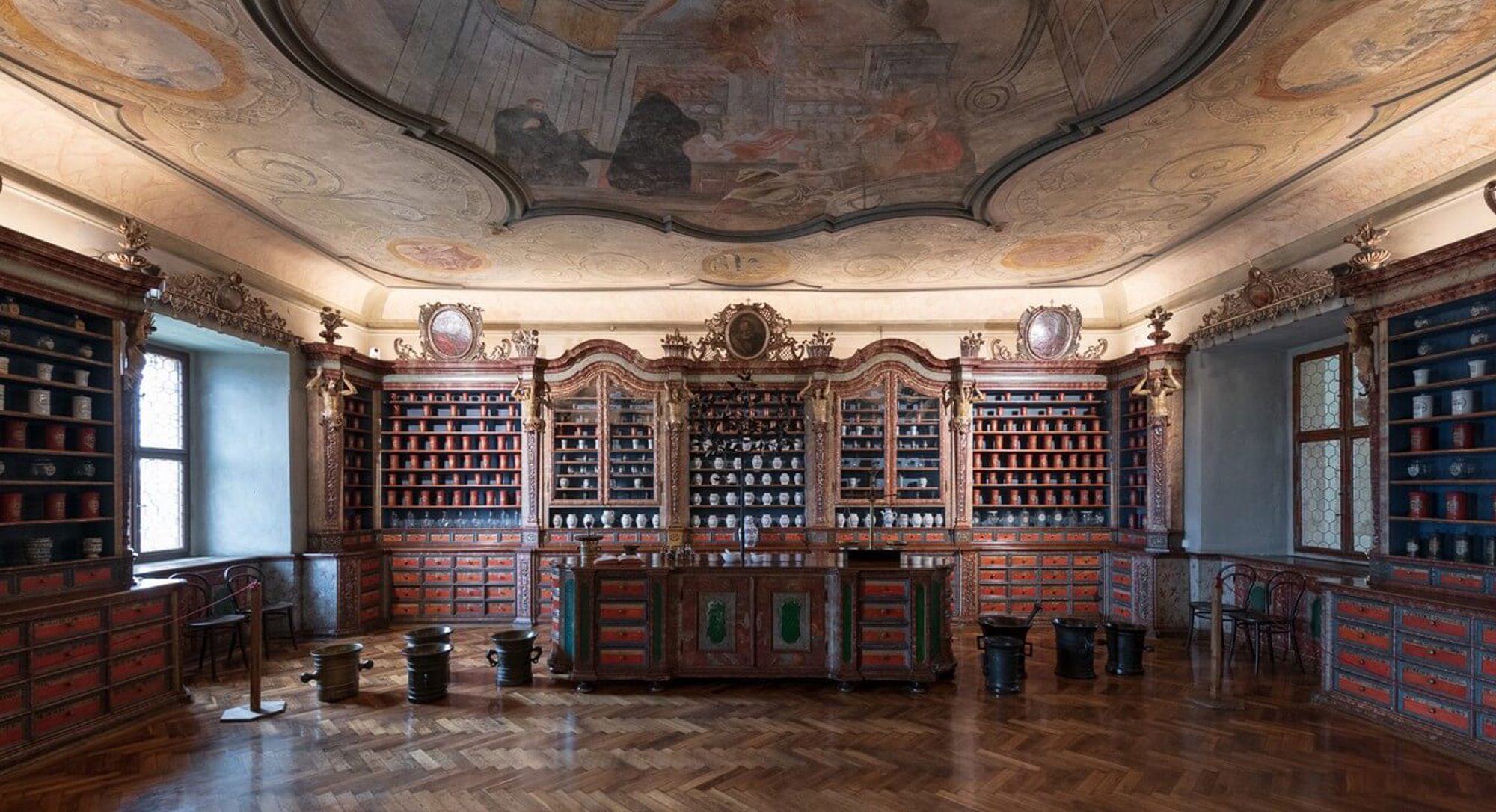
The impressive Baroque Kuks Hospital complex boasts the second oldest preserved pharmacy in Central Europe, on whose shelves we can still find containers of dragon's blood, crayfish eyes or powder from the hangman's skull. We should be grateful for modern healthcare! We also visited the local church and the count's tomb and the renovated herb garden full of Baroque sculptures from the workshop of Matthias Bernard Braun.
The Les Království Dam, which dates back to the early 20th century, fascinated us with its romantic pseudo-Gothic style towers. At the time of construction, this reservoir spanning the Elbe was the largest dam in terms of the amount of water retained, as well as the longest dam (218 m) in what was then Czechoslovakia. Equally interesting is the dam keeper's stone house, which resembles a small castle.
Les Království Dam | Photo: Czech Film Commission
Les Království Dam | Photo: Czech Film Commission
Kuks | Photo: Czech Film Commission
Kuks | Photo: Czech Film Commission
Literally at the end of the world, although in fact only at the end of the road, you’ll find the small quiet village of Chotěborky. In addition to the church, wooden bell tower and rectory, we enjoyed the view of the beautiful landscape.
The reconstructed Baroque rectory in Hněvčeves is furnished with objects from the late Baroque, Classicist, Empire and Biedermeier periods. Prop masters will be thrilled - just bring the cameras and start shooting!
Chotěborky | Photo: Czech Film Commission
Chotěborky | Photo: Czech Film Commission
Hněvčeves | Photo: Czech Film Commission
The next day we headed off to see film-friendly sites in and around Pardubice. First, we stopped in Veliny at the wooden church of St. Nicholas, the bell tower, and morgue dating back to the 18th century. The exterior of the wooden toilet near the church is no less stylish.
We continued to the Vonwiller textile factory and the Museum of Historical Machinery and Technologies in Žamberk. The factory premises, dominated by a four-storey reinforced concrete building from 1911 with large windows, are partly filled with historical cars, motorcycles and other steam and engine engines, as well as props that are ready to be a part of your film.
Vonwiller factory | Photo: Czech Film Commission
Vonwiller factory | Photo: Czech Film Commission
The Hůrka military fortifications from the 1930s surprised us with their vastness. We were particularly impressed by the 800-meter-long corridor with narrow-gauge railway tracks, large halls, an empty elevator shaft, and a 50-meter staircase.
On the Mount of the Mother of God, we took a look at the monastery and the Church of the Assumption of the Virgin Mary. Some of us walked up from the town of Králíky along a path lined with linden trees and the Stations of the Cross to admire the beautiful views of the rolling countryside. For fifteen years, beginning in 1950, the monastery served as an internment camp for monks, who were forced to work in agriculture, forestry and on state farms.
Mount of the Mother of God | Photo: Czech Film Commission
Neratov | Photo: Czech Film Commission
Hůrka military fortifications | Photo: Czech Film Commission
We ended our film journey through the East Bohemian Region at the church in Neratov, which has an amazing glass roof. The sun can conjure up a wonderful atmosphere in the interior at any time of the day. The church never closes - you can stop here even in the middle of the night and look up to the heavens in silence.
Contact for filming in the East Bohemian Region (in the Hradec Králové and Pardubice Regions):
In order to give you the best service, we need your consent.
We use cookies. They help our website work properly so you can quickly find what you are looking for and so we will not bother you with advertising from third-party websites that does not interest you. Your consent helps us keep the website in a familiar format and make further improvements to it.
Custom cookie settings
Cookies that are necessary
for the website to work at all
These cookies ensure that the website works correctly and safely. Necessary cookies are automatically saved in your browser.
Statistical and analytical cookies
help us know what to improve.
With your consent, we can use third-party utilities like Google Analytics, which help us gather feedback and improve our website. You need not worry about your privacy. We monitor anonymised data on the amount of traffic on our website, the average length of a visit, or what parts of the website users are clicking on.
Cookie types
_ga
Registers a unique ID that is used to create statistical data about how the visitor uses the website.
Typ: HTTP | Za kolik dní vyprší: 369
More about cookies
Cookies are small data files that are used to make your experience of using our website more pleasant and are temporarily stored in your browser.
According to the law, we can only store cookies that are necessary for the proper operation of the website without your consent. We need your permission for all other types of cookies.
You can change or cancel your consent and cookie settings at any time via the Cookie settings link in the footer of the website.
Chaoyang is a bustling district located in the heart of Beijing, China. It is known for its modern
architecture, thriving business district, and vibrant nightlife. The area is home to many high-end
shopping malls, luxury hotels, and fine dining restaurants, as well as cultural landmarks such as the
China Red Sandalwood Museum and the Chaoyang Park. With its convenient location and easy access to
public transportation, Chaoyang is a popular destination for both tourists and business travelers alike.
If you're looking for a lively and cosmopolitan experience in China, Chaoyang is definitely worth a
visit.